
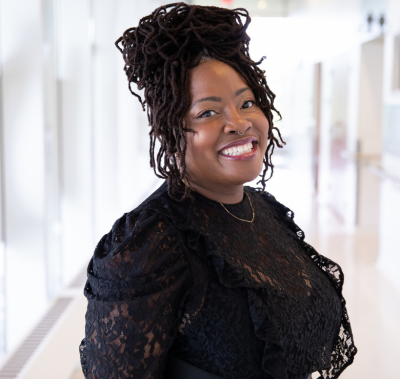
 by Angella Beckford, Blood Clot Survivor, Patient Advocate, and Founding Member of the Rowan Foundation’s Patient & Community Advisory Group
I know firsthand how much it matters to feel heard in a healthcare setting.
A groin strain, they told me. That was the diagnosis when I first went to a Toronto hospital in 2019.
Three days later, back in the same hospital, I received a very different diagnosis: A blood clot in my leg, followed by the discovery of clots in both lungs. What followed was three months in the hospital and a rehabilitation facility, along with a long process of recovering physically and mentally.
My experience changed the direction of my life. While I was in rehabilitation, I was invited to talk about what had happened and share ideas about how patients and healthcare providers could work together more effectively. That was the beginning of my work as a patient advocate, and it pushed me to think more deeply about what it really means for a patient to be heard.
Being heard is more than being allowed to speak. It means knowing that the person caring for you is paying attention to your words, asking questions, and taking the time to understand why you are concerned.
Patients may not know the medical terms for what they are experiencing. We may say that something feels different, that the pain is getting worse, or that we know something is not right. We may struggle to explain a symptom clearly, especially when we are frightened or in pain.
That does not mean what we are saying is unimportant.
A provider may not immediately know what is causing a symptom, and being heard does not mean that every patient is always correct about a possible diagnosis. It means our concerns are taken seriously enough to be explored. It means someone asks another question instead of ending the conversation too quickly.
It also means receiving an explanation we can understand. If a provider does not think a serious condition is likely, it helps to know why. What else could be causing the symptoms? What should we watch for? When should we come back? When should we seek urgent care?
There is a big difference between leaving an appointment with a clear plan and leaving feeling like you were worried about nothing.
Patients Know When Something Has Changed
 Healthcare providers have medical knowledge and experience. Patients bring a different kind of knowledge. We know our own bodies. We know what is normal for us, even if we cannot always explain exactly what has changed.
That information should be part of the conversation.
After my blood clot experience, I became more aware of how difficult it can be for patients to speak up. Some people worry that they will be seen as difficult. Others have had past experiences that made them feel dismissed or judged. Some may not feel confident asking questions or challenging a conclusion, particularly when they are already sick or afraid.
For patients who have felt dismissed or judged before, speaking up can feel like an added burden. As a Black woman and patient advocate, this is part of why I care so much about making space for patients, including Black women and other women of color, whose symptoms and concerns deserve full attention.
Every patient should feel that her voice matters.
Listening Builds Trust
Healthcare is busy. Appointments are short, emergency departments are crowded, and providers are often under tremendous pressure. I understand that. I also believe that a few thoughtful questions can make a meaningful difference.
“What feels different to you?”
“What are you most worried about?”
“Is there anything else you think I should know?”
Those questions tell a patient that the door is still open.
Patients can also prepare. We can write down symptoms and when they began, bring a medication list, share relevant personal and family history, and prepare questions before an appointment. But communication cannot be the patient’s responsibility alone. It has to be a partnership.
Since my diagnosis, I have shared my experience through healthcare symposia, professional education sessions, and patient advisory work. I do this because I want other patients to feel more confident using their voices, and because I want healthcare professionals to understand how much listening can matter.
Being heard does not always mean an immediate answer. Sometimes it means more questions, another evaluation, or a follow-up plan. What it should always mean is that the patient knows her concerns were taken seriously, that she was part of the conversation, not just present for it.
For me, that is where trust begins.


