
Most health education presents symptoms in a tidy list. Real life is rarely that tidy.
A blood clot may cause several recognizable symptoms, only one symptom, or no noticeable symptoms at all. Some symptoms develop suddenly, while others begin mildly and worsen over time. They may also resemble a muscle injury, respiratory infection, or another condition that initially seems less serious.
This is why symptom lists are useful, but they should be treated as a starting point rather than a test someone must “pass” before seeking care.
Deep Vein Thrombosis May Not Be Obvious
Deep vein thrombosis, or DVT, occurs when a blood clot forms in a deep vein, most often in a leg, but sometimes in an arm. Common symptoms include:
- Swelling
- Pain or tenderness
- Warmth
- Redness or skin discoloration
These symptoms do not always appear together or with the same intensity. One person may experience significant swelling and pain. Another may notice only mild tenderness, tightness, heaviness, or a hard-to-describe change.
According to the Centers for Disease Control and Prevention (CDC), about half of people with DVT have no symptoms at all. This is an important limitation of any symptom checklist: Knowing the warning signs can help someone recognize a possible clot, but the absence of those signs cannot rule one out.
When symptoms do occur, they can be mistaken for a pulled muscle, minor injury, skin infection, or inflammation in a vein near the skin.
The absence of dramatic symptoms does not necessarily mean nothing is wrong. Pay attention to symptoms that are unexplained, persist, worsen, affect one side of the body, or feel different from a typical ache or injury.
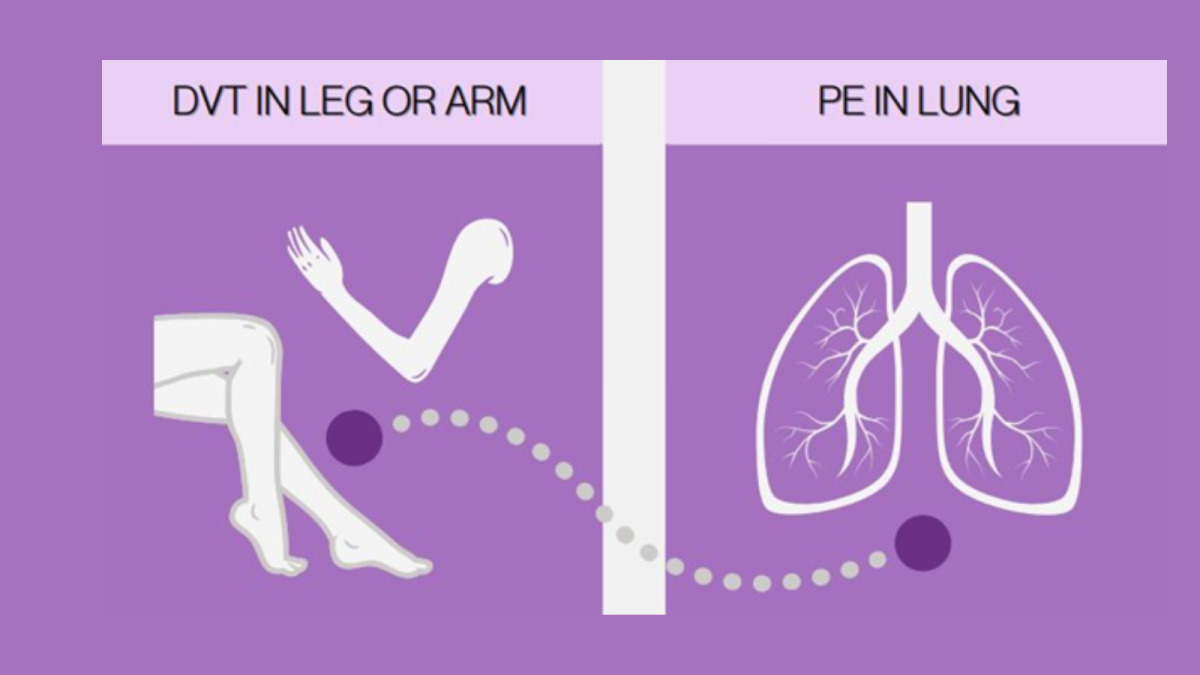
A DVT is dangerous not only because it can interfere with blood flow in the affected limb
The clot may grow, or a piece can break away and travel through the bloodstream to the lungs, where it becomes a pulmonary embolism, a potentially life-threatening emergency.
Pulmonary Embolism Can Occur Without Leg Symptoms
A pulmonary embolism, or PE, occurs when part of a clot breaks away and travels to the lungs. It can happen even when a person has not noticed any signs of DVT.
Possible symptoms include:
- Sudden or unexplained shortness of breath or difficulty breathing
- Chest pain or discomfort, particularly when taking a deep breath or coughing
- Coughing, sometimes with blood
- A fast or irregular heartbeat
Pulmonary embolism symptoms may begin suddenly, but they can also develop more gradually over days or weeks. Early symptoms may seem mild before becoming more serious.
The consequences can be devastating. According to the CDC, sudden death is the first symptom in approximately one-quarter of people who experience a PE. This statistic is not intended to create fear. It underscores why awareness and immediate medical attention for possible PE symptoms are so important.
Because chest pain and difficulty breathing can also occur with conditions such as pneumonia or a heart attack, symptoms alone cannot confirm a pulmonary embolism. Medical evaluation and testing are needed to determine what is happening.
You May Not Experience Every Symptom
Checklists can create the impression that a health emergency will announce itself with every expected warning sign. Blood clots do not always work that way.
A person with a DVT may have pain without visible swelling. Someone with a PE may experience shortness of breath without chest pain. Another person may have symptoms that come and go or appear less severe than the descriptions commonly found online.
Rather than waiting for a complete set of symptoms, consider the broader picture:
- Is the symptom new or unexplained?
- Is it getting worse or not improving as expected?
- Is there swelling, pain, warmth, or discoloration on only one side?
- Does the symptom feel unusual for you?
- Do you have a known blood clot risk factor, such as recent surgery, hospitalization, limited mobility, pregnancy or the postpartum period, certain medications, a previous clot, or a family history of clotting?
Risk factors can help inform a medical evaluation, but their absence does not rule out a clot.
Know When to Seek Care
Contact a healthcare provider promptly if you develop possible signs of DVT, especially unexplained swelling, pain, tenderness, warmth, or discoloration in a leg or arm.
Difficulty breathing, chest pain, coughing up blood, a fast or irregular heartbeat, lightheadedness, or fainting may indicate a pulmonary embolism and require immediate medical attention. Call emergency services rather than waiting to see whether the symptoms improve.
Patients are not responsible for determining whether a symptom is definitely caused by a blood clot. That requires appropriate medical assessment and testing. The patient’s role is to recognize that something has changed and seek care when symptoms may be serious.
Symptoms lists provide valuable guidance, but no list can describe every person’s experience.
Blood Clot Awareness: Recognize Symptoms, Understand Risk
In the end, recognizing symptoms is only part of blood clot awareness. It is also important to understand factors that may increase risk, including surgery or hospitalization, prolonged immobility, pregnancy and the postpartum period, estrogen-containing medications, a previous blood clot, and a personal or family history of clotting. Knowing your risk factors can support more informed conversations with healthcare providers and help you recognize when a new or unexplained symptom may require prompt attention. Learn more about blood clot risks, warning signs, and prevention here.
References
- Centers for Disease Control and Prevention. About Venous Thromboembolism (Blood Clots). Updated March 5, 2025.
- Centers for Disease Control and Prevention. Data and Statistics on Venous Thromboembolism. Updated May 15, 2024.
- Centers for Disease Control and Prevention. Testing and Diagnosis for Venous Thromboembolism. Updated May 15, 2024.
- National Heart, Lung, and Blood Institute. Venous Thromboembolism: Symptoms.
- National Heart, Lung, and Blood Institute. Pulmonary Embolism.


